Tuesday, September 30, 2008

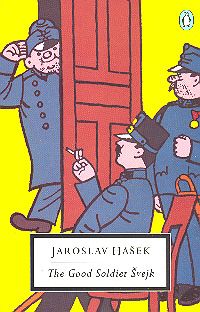
The Good Soldier Svejk


Author Jaroslav Hasek seems like a character from a novel himself. A Czech citizen, Hasek as a youth was an anarchist and a first-class practical joker. After falling in love with a girl whose parents hardly approved of him, Hasek attempted to leave his wild days behind, to little avail. After publishing several short stories, Hasek became editor of an animal magazine. He was dismissed after it was discovered that he was making animals up and writing long descriptions of their physiology and habitats. After attempting to fake his own death in order to get out of his unhappy marriage, he was enlisted in the Austro-Hungarian army and saw duty in the First World War. From this experience, Hasek created an indelible character in The Good Soldier Svejk.

Svejk is Hasek's variation on the bumbling idiot, constantly thwarting the plans of his superiors, and yet somehow never being truly punished. Svejk's simplicity is either real or feigned, it is hard to tell for sure. He is a hard drinker, loves a good time, and is devoted to his superiors to a fault. Through Svejk and his cohort of soldiers and civilians, Hasek has a grand canvas on which to paint the absurdities of military life and wartime. Svejk follows his orders to a tee, even if it means disaster for the army and his superiors.

The book is really a series of vignettes, certainly related to each other, but Hasek never really finished The Good Soldier Svejk. The book just sort of ends without any type of resolution. It hardly matters. This is one of the funniest books I've ever read, and Svejk is one of the most indelible characters I've come across. Hasek planned to finish Svejk, but a stint as a Bolshevik, the icy reception from the Czechs once he returned to Prague, and ultimately his death meant that it was never to be. Still, what we have is a rollicking good novel that will make you laugh out loud as well as think. By the way, the illustrations that adorn the text, by artist Joseph Lada, add immeasurably to the pleasure of reading this book.

NOTE: Thanks to dainfomaster for a great link to all things Svejk.

Monday, September 29, 2008

The Amazing Adventures of Kavalier and Clay


This one, by Michael Chabon, is definitely a favorite, and is a favorite of many of my friends. It's a perfect novel in a lot of ways: memorable characters, sharp plotting, originality in spades, and a storyline that creates a compulsive page turner. This is probably my favorite novel of the past 7 or 8 years.

The plot involves the story of Joe Kavalier, a Jewish teen who escapes from Prague and lands in New York where he hooks up with his cousin Sammy Clay. Sammy, an idea man, is excited to learn that Joe is an artist of some talent, and together they immerse themselves in the world of a beloved 1940s American development: the comic book. Clay remains rooted to his love of the comic, superheroes, and his own 'secret identity', while Kavalier takes a rockier path in his relationships and his own quest to find himself.

While ultimately it is the story and the characters that make this novel so compelling, it really is just a big long love letter to America, and more importantly, the ideal of America; that two kids, one an immigrant, the other an all-American nobody, could transcend class and station to become American success stories. The novel also examines the tricky territory of identity in America, and how individuals can reinvent themselves as they see fit. The Amazing Adventures of Kavalier and Clay is an affirmation of the American dream, and a memorable example of a novelist working at his prime. Chabon won the Pulitzer Prize for this book, and in my opinion deserved it.

Hard Times


This will be the first of what will be many posts on Charles Dickens. Dickens' life was in many ways worthy of novelization. His contribution to western literature cannot be overstated. Some complain that his books are too long, that he was capitalizing on the days when novels were originally serialized in magazines, and a longer story meant a bigger payday. Still, Dickens' best work is a continuation of the social protest of Swift, but imbued with a comic sensibility second to none. His books are beautiful, sprawling, terrifying, hilarious, and cautionary.

Hard Times isn't one of the books that leaps to mind for a lot of people when you mention Dickens, and certainly some of the other novels deserve to be more well-known. But in Hard Times, Dickens points his microscope at utilitarianism, the tyranny of statistics, and the burgeoning industrialization that was the hallmark of northern Britain in the mid ninteenth century.

The story follows Mr. Gradgrind, the administrator of a school, Sissy Jupe, one of his students, and her interactions with his own two children, Louisa and Thomas. Sissy falls afoul of her school's utilitarian atmosphere by following her own flights of fancy. Over time, Sissy's life becomes intertwined with those of the Gradgrinds and their circle.

Dickens' contempt for some of the hallmarks of British society is well-known, and in other books he targets the legal system, the poorhouses, and the education system. Here, he sees the negative aspects of industrialization and conformity as the killing of beauty and imagination. Like most of Dickens' work, it is at turns tragic and comic. You will not forget the characters at the heart of this dark comedy. I'd rate this as top shelf Dickens, if not up to the standards of A Tale of Two Cities or David Copperfield.

The Sea


Sometimes I read for pleasure, sometimes I read for edification. It is a happy day when a book provides both. John Banville's The Sea is one of the books that falls more squarely in the latter category for me. That's not to say I didn't enjoy it, but reading it is more like an exercise in the appreciation of good writing as opposed to hanging on the edge of your seat as the plot unfolds. Banville's prose is incredibly well-written, but can be dense. It wanders as the mind will wander, often going off on tangents, but usually ending up where it needs to.

The Sea is about a man, Max Morden, who has lost his wife to cancer. As part of his grieving process, he revisits a seaside resort where he spent a few eventful summers during his youth. He is clearly searching for something that he feels he lost along the way, or maybe never had in the first place. By his own admission, he is less than driven in his career as an art historian, and has coasted comfortably through his life on the wealth of his wife.

At the resort, Max is haunted by his memories of the Graces, an upper class family with children his own age who represent to him all of the possibilities that seem to be out of his grasp. His interactions with them lead to events that will change both Max and the Grace family.

The Sea is a reflective book, and reading it it is hard not to become reflective oneself. All of the tiny slights, humiliations, triumphs, and decisions a person makes somehow turn cumulative with time, and this beautifully written book forces the reader to examine him or herself. It is not always easy going, but it is rewarding.

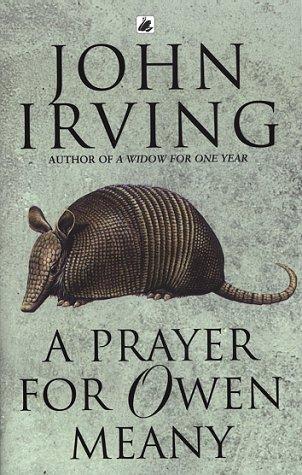
A Prayer for Owen Meany


John Irving is one of my favorite authors. His novels are generally sweeping epics, filled with characters both endearing and absurd. He is a master with plot and is one of the authors who has been able to straddle the fence between popular and highbrow fiction. While he has his detractors, and, in my opinion, some of his recent work has fallen short, the standard he set with The World According to Garp, The Hotel New Hampshire, The Cider House Rules, A Prayer for Owen Meany, and A Son of the Circus is enough to ensure his stature as one the finest authors of his generation.

A Prayer for Owen Meany is probably my favorite Irving novel; it is nostalgic, thought-provoking, profound, and above all else, just a fabulous yarn. The novel takes the form of the rememberances of John Wheelwright, princiapally the time he spent with his friend Owen Meany. Owen, who suffers from an unidentified malady, never progresses beyond the size of a small child. He has a bizarre voice, which Irving represents by using all capital letters when Owen speaks. During a softball game, Owen's only hit of his little league career results in the death of John's beloved mother. From this moment on, Owen is convinced he is an instrument of God, and forsees a future in which his death will save others and have great meaning.

Does Owen have a Christ complex? Or is he truly an instrument of God?John is never really sure until the ending, and everything is made clear. John says early on that he is a Christian because of Owen Meany. Certainly, his relationship with Owen answers questions about his own cloudy paternity and his feelings about faith. Along the way, we meet many memorable characters who engage in events both melodramatic and comical. Irving's sense of humor is intact throughout, although the overall tone is ruminative.

The novel contains John's ruminations on faith as well as his disgust with the state of the U.S. government and its policies (circa the late 1980s). Obviously, this is Irving the author speaking directly to us through one of his characters, a ploy he also uses extensively in The Cider House Rules. These passages can drag, but never for long enough to pull the reader away from an incredibly emotional reading experience.

Sunday, September 28, 2008

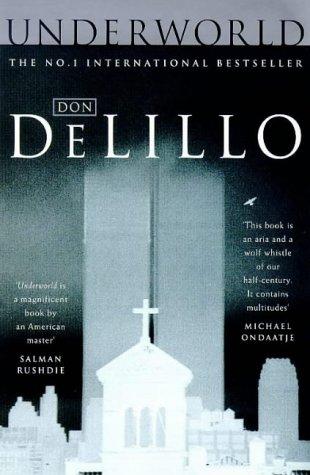
Underworld


Tackling Underworld is a daunting task. Eight hundred and twenty seven pages that span the better part of 50 years, the narrative jumps back and forth in time in a liquid fashion that can leave the reader mentally exhausted.

Although the majority of the book is 'about' Nick Shay, a native New Yorker with a hardscrabble upbringing who becomes an Arizona based solid waste disposal executive, the real main character of Underworld is the Cold War era and the way it defined the lives of those who came of age during it. Nick, his military scientist brother, his former lover, her chess-teaching husband, Nick's mother, wife, and a baseball memorabilia collector are the vessels through which the narrative weaves, tackling issues as diverse as dementia, redemption, the arms race, the loss of the ideals of the 1950s, and yes, the logical extension of how mankind deals with its trash.

The writing is pretty amazing. The much-lauded first chapter, an omniscient description of the legendary 1951 baseball game between the Giants and the Dodgers at the Polo Grounds in New York, deserves the praise that has been heaped upon it. DeLillo skillfully interweaves the individual stories of random ordinary folk in the stands with the musings of the more famous celebrities present: Jackie Gleason, Frank Sinatra, and J. Edgar Hoover. The baseball that Bobby Thomson launches into the stands becomes a focal point for much of the narrative that follows.

DeLillo was clearly aiming for the grandstands himself with this novel. The book, published in 1997, has a cover which features the Twin Towers looming behind a graveyard. Not only does this image seem eerily prescient, but the novel stands as a grand elegy to the twentieth century and all the personal and societal upheaval encountered during its final forty years. Even at its great length, the novel somehow feels unfinished, leaving the reader in the same kind of limbo the 20th century abandoned us in.

Misfortune


Misfortune was the first novel from Wesley Stace, who is also known as 'gangsta-folk' artist John Wesley Harding. As Harding, Stace has released several albums beginning in the late 1980s. At that time, Stace abandoned a PhD he was seeking in order to focus on becoming a full time professional musician. During that time, he wrote a song entitled 'Miss Fortune' about a male baby who is found orphaned by a wealthy man and brought up as a girl. This song served as the genesis for the novel. (For an extensive interview I was fortunate enough to conduct with Stace about his music career and his first novel, go here.)

Misfortune, which is set in the latter part of the nineteenth century, begins just like the song. Lord Lovall discovers the infant in a trash pile and brings him home, and, for reasons of his own, names him Rose and raises him as a girl. Rose lives an idyllic life in the English countryside, surrounded by family and friends, until secondary sexual characteristics begin to manifest themselves and life becomes, as you can imagine, far more complicated. This exploration of gender, identity, different types of love and the quality of love earned almost universal praise when it was released and appeared on many 'Best Of' lists for 2005.

I loved this book for a number of reasons. Firstly, it can be honestly described as 'Dickensian' in its setting, ambition, and sprawl. Characters have names that would have pleased Dickens, and the bizarre interactions between some of them, and the neat ending, are also traits associated with the master. Secondly, while the style is certainly a throwback to the novelists of the nineteenth century, the subject matter most certainly contains a more modern slant. The concept of sexual identity was not completely foreign to the writers of that time, but probably wouldn't have been viewed through the lens of late twentieth century morays as this book is.

Misfortune is a thoroughly entertaining novel. It keeps the reader interested and is ambitious in scope and size, especially for a first novel (albeit one many years in the making). I love big novels wherein a reader can get lost in a familiar, but ultimately fabricated world, and this is one of them.

Gabriel's Gift


The novelist Hanif Kureishi is perhaps better known as a screenwriter, and his credits include indie faves such as Sammy and Rosie Get Laid and My Beautiful Launderette. He has also written books, including The Buddha of Suburbia and this novel, Gabriel's Gift.

Gabriel's Gift is the story of a teenage boy who's family is falling apart. His rarely employed father, a former member of a superstar musician's band, is not supporting his family. His mother, understandably resentful of his lazy ways, decides to toss him out the door. Gabriel retreats into his imagination, where he has conversations with his dead twin. Things are going poorly for Gabriel until he meets the rock star his father once played for, Lester Jones. Jones, a David Bowie-esque glam rocker from the seventies, gives Gabriel a drawing, and the ownership of this drawing sets into motion a chain of events that change Gabriel, and his family, forever.

This is a very light-hearted book that is very easy to digest in a couple of extended sittings. For some reason, I am always drawn to stories about Britain's lower-middle class. Kureishi is a strong storyteller, and it is no surprise that there is a cinematic quality to his writing. This one left me with a very good feeling and is a great one to take on the plane or to the beach. As a musician, I especially enjoyed the meditations on the nature of creativity and self-expression, which form the basis for the action of the plot.

The Plot Against America


I first read a Philip Roth novel while I was in college. It was Portnoy's Complaint and I did not enjoy it. After reading a few more of his books over the past year, I am anxious to go back and re-read Portnoy's. I am beginning to suspect I lacked the worldview to understand it properly at the time. With the deaths of Saul Bellow, Joseph Heller, and Kurt Vonnegut in recent years, Roth is arguably the most important American novelist left of his generation. His output over the past ten or twelve years has been prodigious and, at age 75, he has a new novel, Indignation, released this past week.

The Plot Against America combines great story-telling with 'What If' history and is a very compelling novel. Nobody who has read Roth before will be surprised that the setting is Newark in the 1940s, or that the narrator's name is, well, Philip Roth. Most of Roth's work has some elements of autobiography and it is not the first time he has inserted a character with his own name into the proceedings. In this alternate telling of history, the aviator and national hero Charles Lindbergh has run successfully for the presidency of the United States, defeating Roosevelt on a platform of isolationism, effectively keeping the United States out of World War II. Lindbergh, in fact, was an avid isolationist, and spoke forcefully on the matter many times. In Roth's alternate tale, Lindbergh's Nazi sympathies and tacit agreements with Hitler slowly begin to erode the quality of life and civil liberties of America's Jewish citizens, including the Roth family. What makes the book so compelling is that Roth presents an alternate history that is not difficult to believe would happen if the right circumstances existed. In addition, the forced migrations, attempts to integrate Jews into mainstream middle America, and the lynchings of some dissenters are eerily similar to real fates that befell American Indians and African Americans in the earlier parts of the last century.

This novel is an excellent starting point for Roth if you haven't read any of his work. It was hard to put this one down.

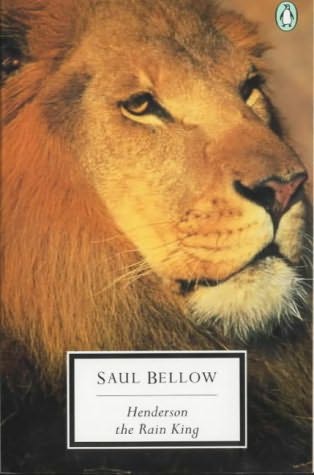
Henderson the Rain King


Saul Bellow is one of the most notable American authors of the past century, and Henderson the Rain King was the first book of his I have read. Originally published in 1958, the novel is the story of Gene Henderson, a wealthy middle aged American man who is lost in the middle of the American century. An absentee father, twice-divorced, and borderline alcoholic, Henderson is desperately seeking to find out what its all about. To fulfill his dream of finding a new life, he makes an impromptu trip into the African Bush, with only his long-suffering faithful guide Romilayu to help him along the way. His interactions with two tribes in the region are hilarious and profound. His relationship with King Dahfu is the basis for Bellow's thoughts on modern culture, what makes a man a man, and the philosophy of the meaning of strength.

I enjoyed this novel very much and am looking forward to reading more of Bellow's work (although I understand that this novel is not necessarily typical for him). My favorite part of Henderson the Rain King is Henderson himself. He is a comic creation that can be compared favorably to Ignatius Reilly from A Confederacy of Dunces. His blustering, yet heartfelt, manner with the citizens of the African tribes he meets up with make him a perfect symbol of all that is regrettable and great about the American abroad. The last third of the book becomes a little ponderous, as Bellow shifts from comic plot to philosophical debate (embodied in the discussions between Henderson and the King) but the ending is satisfying and I laughed out loud a number of times. Guys feeling the mid-life crisis burn should definitely give this one a read.