Showing posts with label comic novels. Show all posts

Sunday, October 18, 2009

Vile Bodies


I am a fan of British humor. To me, the Brits have mastered the nifty trick of mixing the absurd with the very, very dry. Peter Sellers, Monty Python, and Ricky Gervais all come to mind. Evelyn Waugh, best known for his novel Brideshead Revisited, has also tapped into this reservoir of English comedy in his second novel, Vile Bodies.

Set in the years after the first World War, Vile Bodies centers on the character of Adam, a down on his luck writer who undergoes a series of reversals of fortune. He is in love with Nina, but alternately does and doesn't have the money to marry her. And while their up and down love affair is the focus, the novel is really a sharp lampoon of the 'jet set' of the day and their follies and foibles. Characters such as Mrs. Melrose Ape, the evangelist, Mr. Outrage, the Prime Minister, and the Drunken Major are on hand to act as a canvas for Waugh's broad swipes at British pre-war culture. All of the latest fads and fancies are on hand: zeppelins, motor races, parties, film making, and more parties. The juxtaposition between the old who are still trying to embrace Victorian morals, and the young, who are portrayed as vapid, yet resourceful, is one of the things that makes this novel stand out.

A particularly thoughtful point for me was the ending, which finds Britain at war in Europe, and the various fates of our characters seem fitting for the action that has preceded. Great stuff. The book was adapted into a film by Stephen Fry.

Friday, May 15, 2009

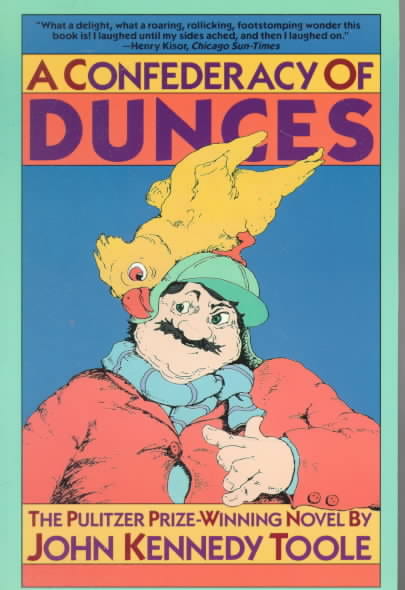
A Confederacy of Dunces


An all time classic comic novel, A Confederacy of Dunces by John Kennedy Toole is also a New Orleans classic. I read this book before I ever imagined living in New Orleans, and it painted an amazingly vivid picture of a place I became determined to visit someday.

The novel concerns the comic exploits of Ignatius J. Reilly, indelible resident of Uptown New Orleans and sufferer of chronic 'valve' problems. Ignatius still lives with his mother although he is thirty and spends his days writing in his journal about the shortcomings of the rest of humanity. Ignatius is a man out of time; a lover of geometry and theology, a hater of popular culture. He attends movies in order to make fun of them. In other words, he wallows in the very material he finds so offensive. He is agoraphobic, a slob, and has delusions of grandeur.

The book is more of an extended character study of Ignatius and New Orleans than it is a traditional plot arc. We meet the denizens of New Orleans, Myrna (Reilly's sometime girlfriend), the long suffering mother, and a bevy of oddball characters. Having lived in New Orleans for over ten years, I have to say that its depictions are incredibly accurate in all their hilarity. Ignatius' attempts at gainful employment (as a hot dog vendor and in a pants factory amongst others) are hilarious enough to sustain the novel.

One of the amazing things about this novel is the route it took to publication. Toole was a young New Orleanian who committed suicide in 1969. His mother found the smeared carbon copied manuscript amongst his effects and in the later 1970s sought out noted author Walker Percy and badgered him into reading a novel by her dead son. Percy did so reluctantly, but found himself more and more entranced as he read on. Using his connections and influences, the book was finally published in 1980 and won the Pulitzer Prize for Literature the following year.

I have purchased and give this novel away at least a half dozen times. I have not read it for several years but plan to reread it for the 4th or 5th time this summer. Simply brilliant, and a top ten favorite for me.

Ignatius J. Reilly is such a part of New Orleans culture, you can visit his bronze image on Canal Street:

Tuesday, September 30, 2008

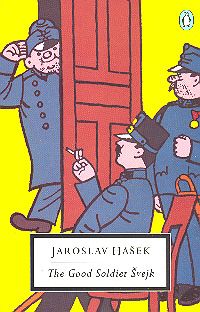
The Good Soldier Svejk


Author Jaroslav Hasek seems like a character from a novel himself. A Czech citizen, Hasek as a youth was an anarchist and a first-class practical joker. After falling in love with a girl whose parents hardly approved of him, Hasek attempted to leave his wild days behind, to little avail. After publishing several short stories, Hasek became editor of an animal magazine. He was dismissed after it was discovered that he was making animals up and writing long descriptions of their physiology and habitats. After attempting to fake his own death in order to get out of his unhappy marriage, he was enlisted in the Austro-Hungarian army and saw duty in the First World War. From this experience, Hasek created an indelible character in The Good Soldier Svejk.

Svejk is Hasek's variation on the bumbling idiot, constantly thwarting the plans of his superiors, and yet somehow never being truly punished. Svejk's simplicity is either real or feigned, it is hard to tell for sure. He is a hard drinker, loves a good time, and is devoted to his superiors to a fault. Through Svejk and his cohort of soldiers and civilians, Hasek has a grand canvas on which to paint the absurdities of military life and wartime. Svejk follows his orders to a tee, even if it means disaster for the army and his superiors.

The book is really a series of vignettes, certainly related to each other, but Hasek never really finished The Good Soldier Svejk. The book just sort of ends without any type of resolution. It hardly matters. This is one of the funniest books I've ever read, and Svejk is one of the most indelible characters I've come across. Hasek planned to finish Svejk, but a stint as a Bolshevik, the icy reception from the Czechs once he returned to Prague, and ultimately his death meant that it was never to be. Still, what we have is a rollicking good novel that will make you laugh out loud as well as think. By the way, the illustrations that adorn the text, by artist Joseph Lada, add immeasurably to the pleasure of reading this book.

NOTE: Thanks to dainfomaster for a great link to all things Svejk.

Sunday, September 28, 2008

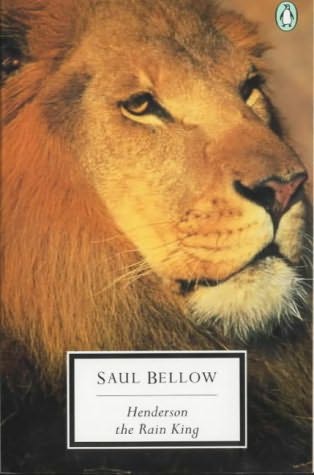
Henderson the Rain King


Saul Bellow is one of the most notable American authors of the past century, and Henderson the Rain King was the first book of his I have read. Originally published in 1958, the novel is the story of Gene Henderson, a wealthy middle aged American man who is lost in the middle of the American century. An absentee father, twice-divorced, and borderline alcoholic, Henderson is desperately seeking to find out what its all about. To fulfill his dream of finding a new life, he makes an impromptu trip into the African Bush, with only his long-suffering faithful guide Romilayu to help him along the way. His interactions with two tribes in the region are hilarious and profound. His relationship with King Dahfu is the basis for Bellow's thoughts on modern culture, what makes a man a man, and the philosophy of the meaning of strength.

I enjoyed this novel very much and am looking forward to reading more of Bellow's work (although I understand that this novel is not necessarily typical for him). My favorite part of Henderson the Rain King is Henderson himself. He is a comic creation that can be compared favorably to Ignatius Reilly from A Confederacy of Dunces. His blustering, yet heartfelt, manner with the citizens of the African tribes he meets up with make him a perfect symbol of all that is regrettable and great about the American abroad. The last third of the book becomes a little ponderous, as Bellow shifts from comic plot to philosophical debate (embodied in the discussions between Henderson and the King) but the ending is satisfying and I laughed out loud a number of times. Guys feeling the mid-life crisis burn should definitely give this one a read.